
Lesson 11 of 13 · about 6 minutes
The brainstem and cranial nerves
Life support and the nerves of the head.

In the 3D app, the brain flies to each part as you read, and 2 quick questions at the end help it stick. Here is the whole lesson to read.
- 1
The midbrain
The top of the brainstem handles eye movements and quick reflexes, and holds the dopamine-making substantia nigra.
More about the midbrain →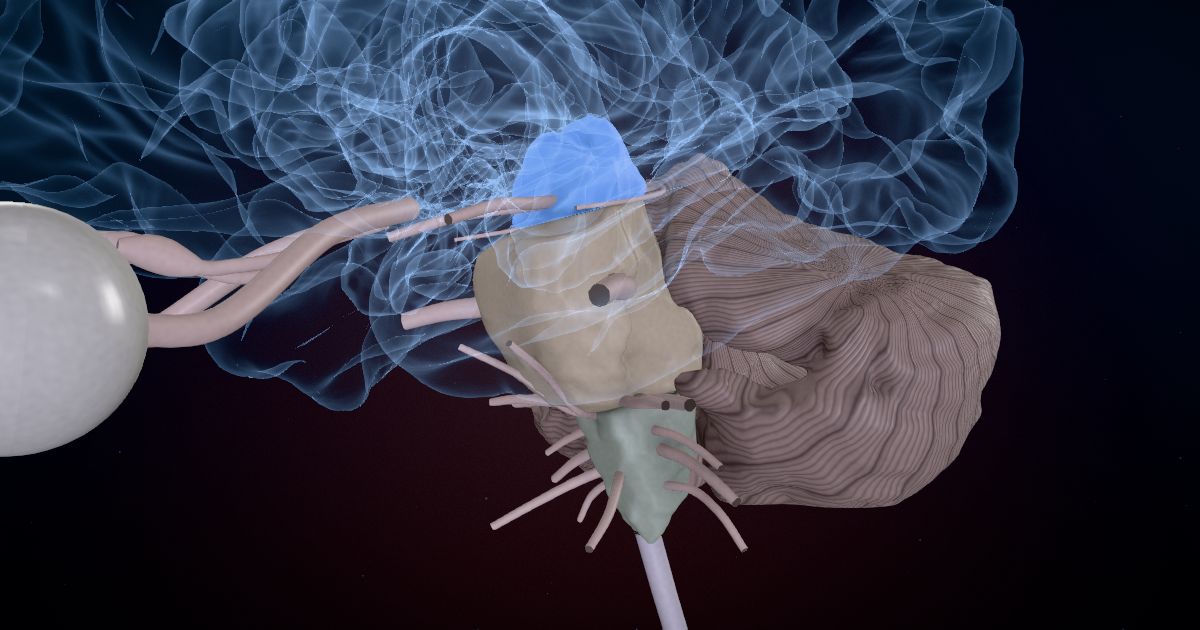
- 2
The pons
The bridge-like pons links the cerebrum to the cerebellum and helps control breathing and sleep.
More about the pons →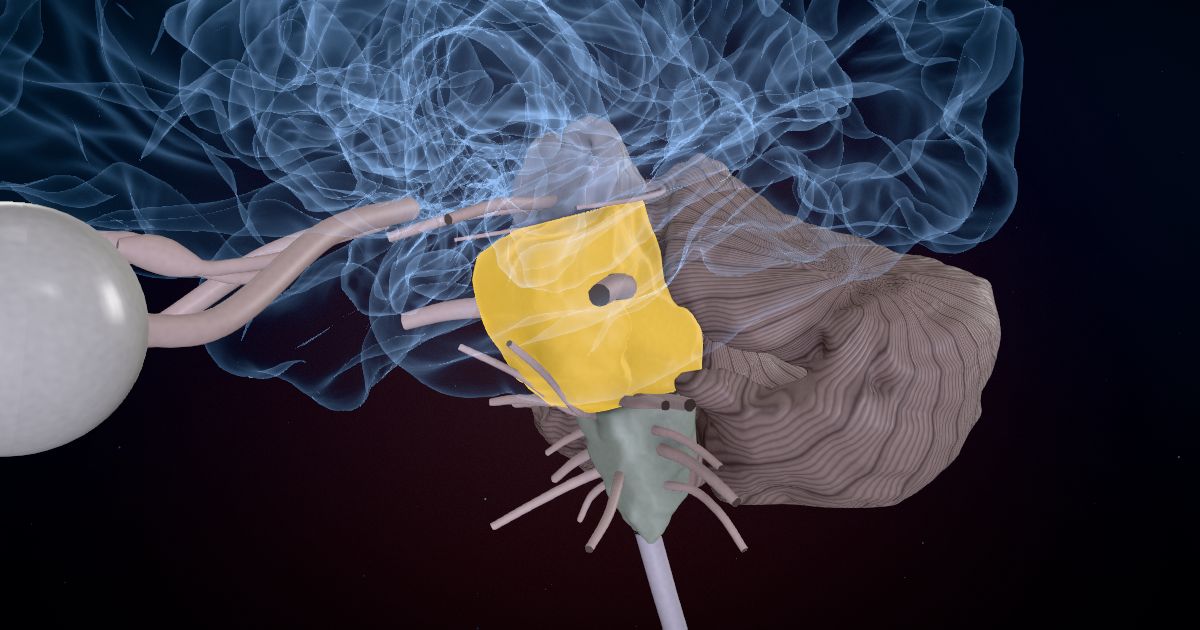
- 3
The medulla
The medulla runs breathing, heart rate and blood pressure. It is also where the movement pathways cross sides.
More about the medulla oblongata →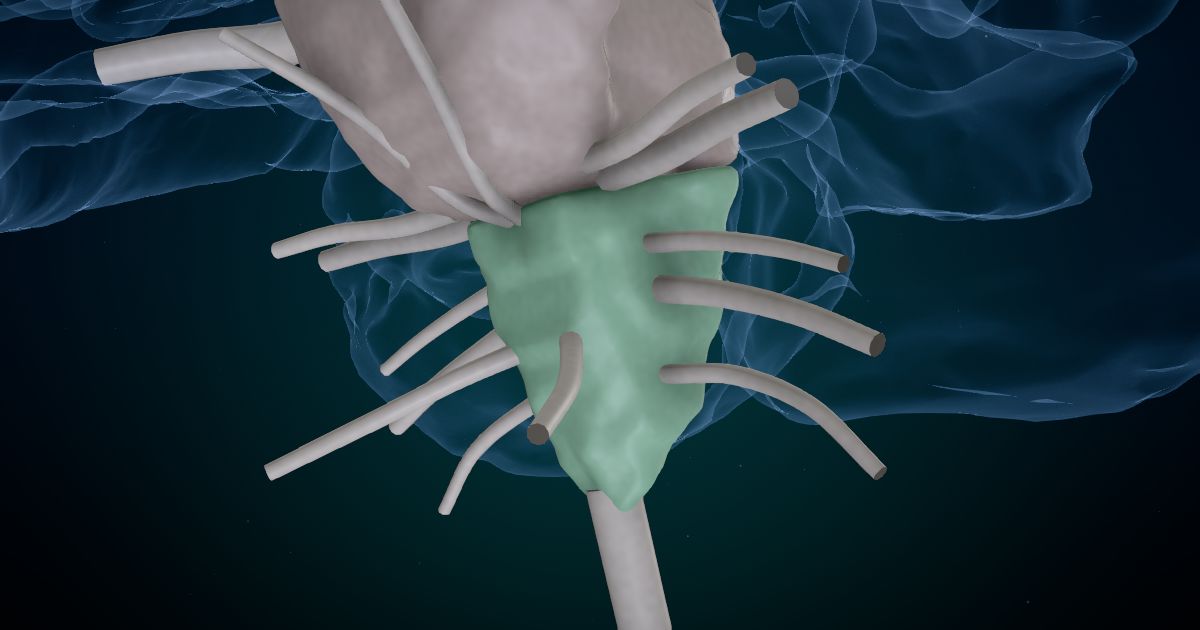
- 4
Moving the eyes
Three cranial nerves move the eyes. The oculomotor nerve (III) does most of the work and also lifts the eyelid.
More about the oculomotor nerve (III) →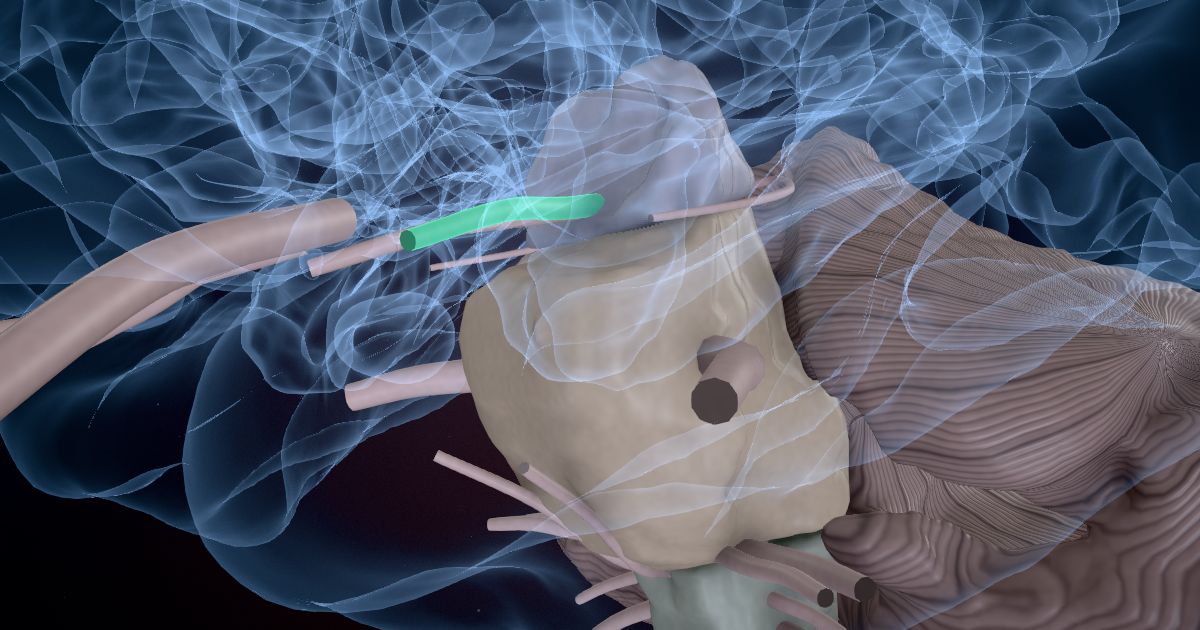
- 5
Feeling the face
The trigeminal nerve (V) feels the face and works the chewing muscles.
More about the trigeminal nerve (V) →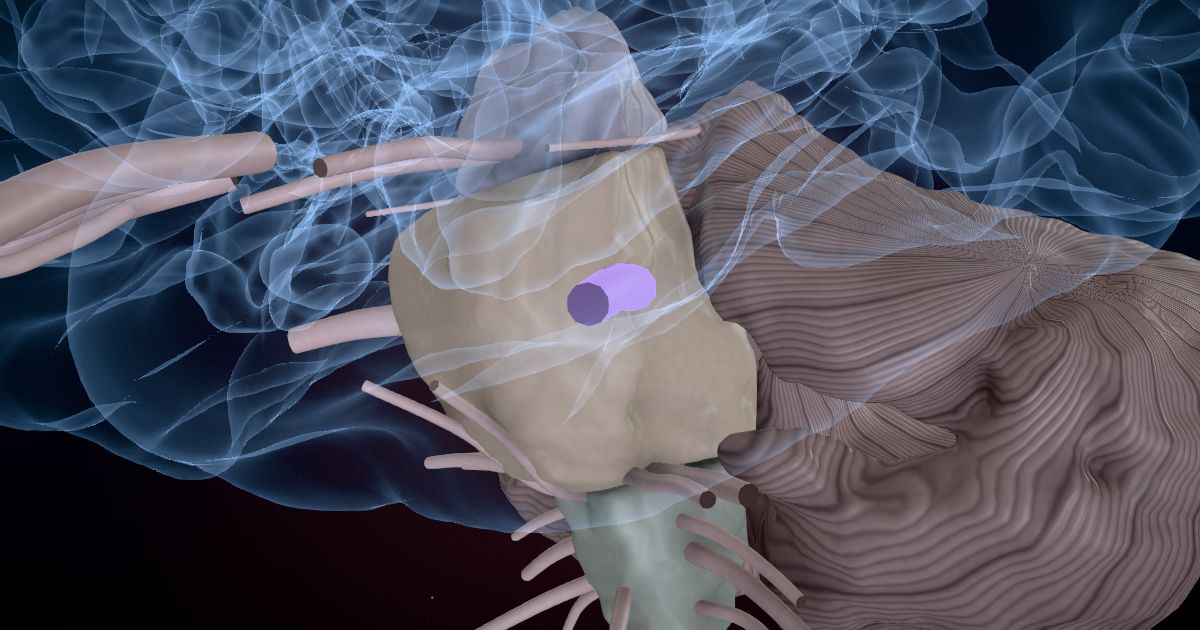
- 6
Moving the face
The facial nerve (VII) moves the muscles of expression. When it fails, one whole side of the face droops, as in Bell's palsy.
More about the facial nerve (VII) →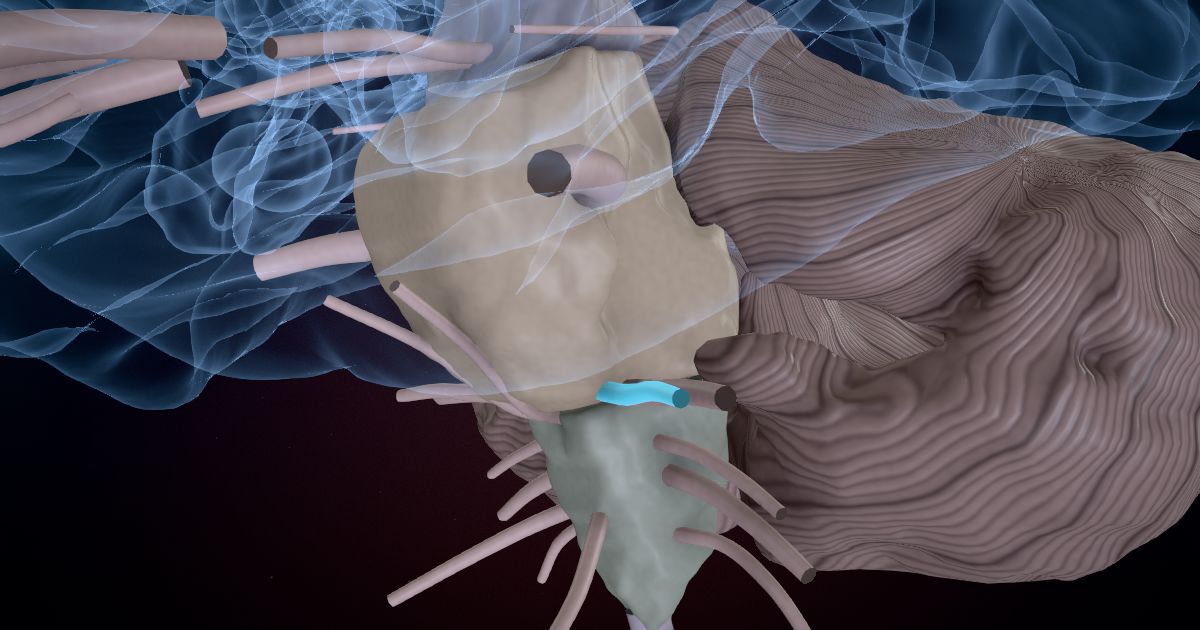
- 7
The wanderer
The vagus nerve (X) wanders down to the heart, lungs and gut, and helps calm the body.
More about the vagus nerve (X) →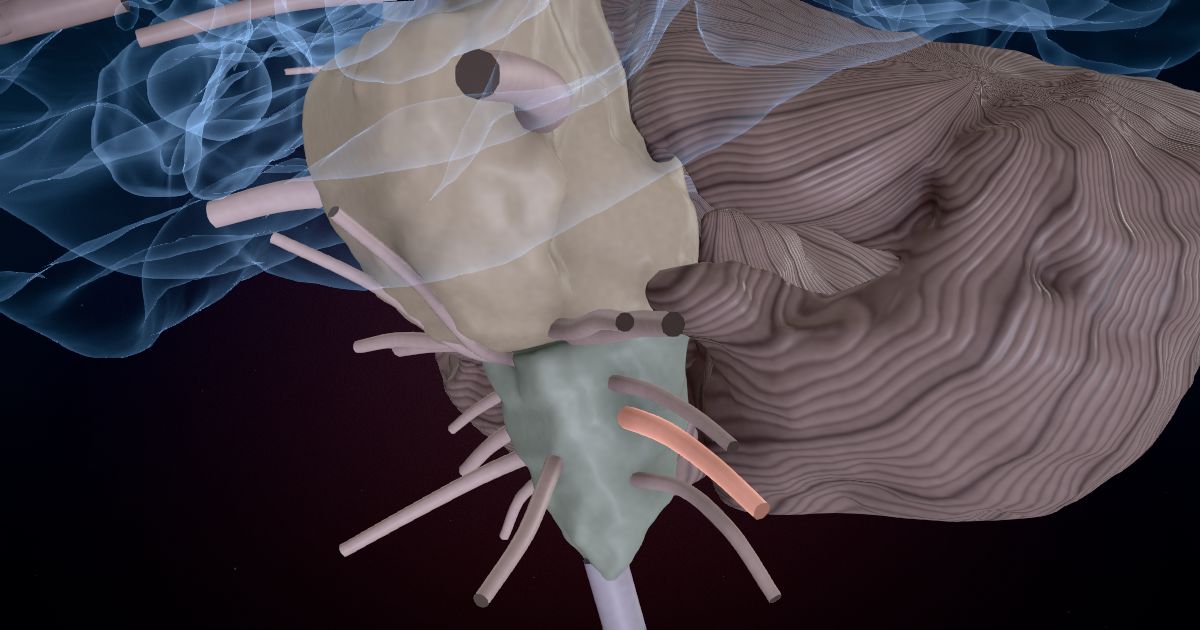


Now see it for yourself
Take this lesson in 3D: turn the brain around, look inside, and finish with 2 quick questions.
Start the lesson in 3D